Thursday, June 29, 2006

Green River Update

Since our meeting with Kevin Carter a lot has happened. I don’t know that we have made progress; I’d like to think that we have but, the picture is definitely clearing up. The bottom line is we have two government agencies that really don’t like each other and have done a poor job of communicating back and forth over the years. Getting them both on the same page for now is what needs to happen.

On Monday we met with DWR. They have expressed their interest in this parcel on numerous occasions to SITLA, however they have valued the land based upon its grazing and wildlife potential. Those values equate to roughly $1000.00/acre. Obviously, SITLA isn’t marketing this property based upon these values. Consequently the Divisions offer has or was not acceptable.

The current offer from Flint Timber and Spinnerfall, although we don’t know what that is, is higher than the $1000.00/acre that the Division put on the table. The Division by mandate can only spend 10% above their own appraised value. Again this number falls significantly short of what is on the table.

Due to public pressure and some other issues SITLA would really like to do this deal with DWR. There are a number of factors that play into this, which are all positive. The biggest hold up is DWR’s valuation.

After our meeting on Monday the Division agreed to reevaluate their appraisal based upon the offer that is now before SITLA. It’s frustrating, however since no one but Flint Timber and Spinnerfall know what the present offer is. This is a unique piece of property. Should this hit the open market, who knows how much it could sell for?

Our time table is July 7 for a decision by SITLA on which way to go. They must take the current offer if a competing bid of some sort doesn’t materialize. The Division has an opportunity here, but it is complicated. They also have some partners who are willing to help finance the deal. Unfortunately at this juncture there are a lot of what if’s and maybe’s. Hopefully by next week there will be some clarifications and all these factors will fall into place to our benefit.

Worse case scenarios, if this should go through, are the complexities and complications of developing this property. For one, the Divisions attorneys have determined that the access road to SITLA’s land falls 400’ short of the property line. Even if the road enters their property, you can’t pave it, so how would you get material to the job site. There is the issue of historical artifacts that litter the property. Power is another problem. Most likely this development would have to be run off of generators. These are just some of the major stumbling blocks that may end up putting the kibosh on this project.

Keep the pressure on. Things are moving forward. Not at fast as we would like, but we remain optimistic. If you haven’t written letters, there are e-mail addresses in my previous Blog. I would add Flint Timber and Spinnerfall to your list as well. If either of these parties backs out at this stage of the game, there is not deal.

Monday, June 26, 2006

Road Trip

It’s Saturday afternoon and Matt from the shop has just returned from the Henry’s Fork. He stopped by my home to drop off a set of keys and to fill me in. Unfortunately I was entrenched in a phone conversation that I couldn’t break from, so he barely wet my whistle before I had to get back to my call. By the time Monday rolled around, there wasn’t much time to think more about wetting a line.

Monday 7:30am I get the first of the weekends fishing reports. It’s been a while since I’ve taken time to fish and the calls are getting to me. Plain and simple, the fishing is really good and it's good all over. It’s that time of year when making a decision regarding where to go gets difficult. Time maybe the limiting factor.

Pete, and old shop rat, and a few of his buddies ring me up at 8:30 am. It’s a three cup starter and I’m already into my fourth when he calls. They’ve just returned also from the Henry’s Fork. He started out the conversation something like “man you gotta get up there. Brown Drakes, Caddis, PMD & Flav Spinners all over the waters, it was awesome”. With the long weekend ahead I’ve been eyeing a window of opportunity to travel. Regardless of what I have on my plate, it my just have to wait. Hopefully the recent politics that I’ve been caught in the middle of will be such that I can escape for a brief reprieve. Sounds like the years first “Road Trip” may be in order.

I’d stick around here, but part of my motivation is to escape the little head wave we are having. Arriving back at the shop after a meeting with DWR over the Green River Development the outside temperatures have reached 97. The massive caldera that precolates the prolific waters of the Henry’s Fork will yield far cooler temperatures. I despise heat, andtolerate it only when emersed in water somewhere. So far the plantes seem to be lining up and there's great motivation to get things do to clear my calendar of anything that may impede a few days of camp coffee, drakes, and Grub Stake lunches.

Development Progress

Friday we met with Kevin Carter of SITLA to discuss options that may still be available to those who are seeking alternatives to the use of this 363 acre parcel other than what is currently on the table. Unfortunately there are no easy solutions given the mandate that SITLA must follow.

The good news is tha there are opportunities and there are interested parities with the financial ability to purchase this parcel. However, SITLA, at this late juncture must perceive that there is a viable and competitive market that is capable of entering into a financial arrangement before triggering this process. I don’t think that this is going to be difficult to prove or initiated. But that’s where the process gets complicated.

Regardless of the direction that this project moves, there is still a fair amount of uncertainty. After our meeting it was clear that their mandate for moving forward in a direction that suits the public's interest is not one that is cut and dry. However, thanks to everyone’s letters some doors have been opened and options made available. If we had not gotten involved this would have already been a done deal. As a result SITLA has granted us time and graciously given us opportunities. I respectfully use the term gracious due to the late nature of our intervention. After all we entered into this process at the 11th hour.

The deadline for their decision could come as late/early as July 7th. At his point in time that decision would involve staying the course and leasing the parcel to the Flint Timber and Spinner Fall Guide Service or triggering the purchase process. To my understanding, should they enter into the latter of these two options, decisions won’t be made until December.

Letters are still a good thing to send in. Again if you should write, keep the letters positive. As Kevin said, correspondences that start why “Hey Asshole”, don’t get paid much attention. His office has responded to our requests. Public sentiment has opened the door and we’ve got as good an opportunity to change the course as we are going to get. If you are going to throw expletives around, they should be directed to those currently seeking to develop this land.

Friday, June 23, 2006

Cross Your Fingers

It’s 6am and I had a rough night of sleep contemplating what is to unfold today. I’m not good at politics, but have learned over the years it’s a necessary part of the business process regardless of your vocation. I find it very emotional and draining. Although it can be rewarding, I much prefer dealing with the my customers and sticking to what I know best, fishing with a fly.

Today is a critical one regarding the Green River Development issue. At 2:00pm we meet with the Trust for Public Lands (TPL) before sitting down with Kevin Carter of SITLA. TPL is willing to negotiate with SITLA for the controversial parcel that would have been awarded to Flint Timber and Spinnerfall guide service for development. Thanks to anglers and a number of individual efforts this contract has been rescinded hopefully for ever. We will know more after 3pm today.

TPL is a group who intervenes in such critical issues and negotiates to take such lands and habitats off the market. Should they be successful, they will then make arrangements to place these lands into appropriate hands for management. Should this be successful, it is most likely that this parcel will eventually end up in UDWR’s inventory. They already have a section that adjoins this SITLA parcel.

TPL isn’t the only group who is pursuing this property, however all parties currently involved are working together to see that this goes through. At the moment we are in a great position to move forward and settle this. We are fortunate that SITLA is entertaining a sale of the property that would take this parcel out of their inventory and put it in the hands of someone who would manage it for the beneficial use of all with the intention of preserving the experience that we have come to enjoy and respect on Utah’s Green River.

The Nature Conservancy is another group whose involvement has been instrumental in this. I have had a number of conversations with David Livermore and Chris Montague that have helped us negotiate this transaction and bring it to where it is today. Without their intervention in the early stages of this process, I don’t know that we would have gotten the opportunities that we currently have.

There are a lot of people and groups here, Stonefly Society, Denny Breer, Terry Collier to mention a few, who are making this happen. Hats off to all! Wish us luck and at 3:00pm keep your fingers crossed. We’ll know more by the day's end….

Wednesday, June 21, 2006

For now a Reprieve

Monday the fishing community received a gift. Gayle McKeachnie called to inform us that he had received information regarding the Green River Development that we would find interesting. We were all ears.

After receiving confirmation on Friday that SITLA had come to a decision and would announce their deal on Monday, we were optimistic that the angling community’s efforts and voice had been heard. At 2:00 pm our speculation was confirmed. Kevin Carter and his office had decided to hold off on their decision and for the mean time and not lease those sensitive lands within the Green River corridor to Spinner Fall and it’s partners.

In today’s Salt Lake Tribune there was an article stating that SITLA would not make a decision on how best to deal with this controversial parcel for another 3-4 weeks. More good news!

Keep writing those letters. At this juncture should you respond, please express your feelings and concerns in a positive light. Since we have our foot in the door, we don’t want to slap the hand that has extended the “Olive Branch”. E-mails should be sent to the following addresses: kevincarter@utah.gov, Governor@utah.gov, JLee@pblutah.com, ccollett@daggett.state.ut.us.


We’ll done everyone. Keep your fingers crossed. I’ll do my best to keep everyone updated at to this issue progress.

Tuesday, June 13, 2006

Green River Development

Back in the fall, I learned of a proposed Lodge potentially being built on the only piece of land that is not controlled by the Forest Service with the Green River corridor. This property is controlled by SITLA (School Institutional Trust Lands). Their sole purpose is to maximize the profitability of lands they control. They do this with very little regard to the impacts their practices have on wildlife or recreational values. Should this come to fruition, this Lodge will serve only a few of the corridor's privileged clients, yet it’s impact and presence will effect many.

Dagett County Commissioners have supported this project believing that it will help increase their tax base. Given the potential impacts as perceived by the public and users of this incredible resource, I can’t help but believe that what few dollars they receive from this development will be offset by those who are deterred by further development and use within an already congested corridor. This doesn’t take into consideration pressures from the developer to provide services that others enjoy within the county.

The project as presented by Spinner Fall Guide Service and their clients, who represent timber interests, would encompass a main lodge and ten to twelve individual cabins to house the lodge's clients. This is just the preliminary development. As indicated by the Executive Director of SITLA there are opportunities for further development.

The Green is an amazing resource. Without a doubt it is one of the finest and most beautiful trout fisheries in the country. At times, like any fishery of its caliber, it gets crowded. This does not go without notice and publicity. Should this Lodge be built it will only add to the congestion and perception that has lead to a decline in visitors to this river.

More importantly this piece of land, a little less than 400 acres, is critical habitat for wildlife. The Division of Wildlife Resources has tried to sequester a deal with SITLA on this property for years recognizing the potential for development and that potential to disrupt and impact wildlife and fisheries. We know for fact that all and any offers have been denied.

SITLA has options. To date they have been unwavering in their efforts. To see this development go through given the impact it will have on all users and wildlife would set an irreversible precedence. At the moment there are no public or private developments within this pristine 20 mile corridor, a unique and priceless rarity this day and age. Although the developer says their project will have little impact on the area, how could it not, especially during the construction phase of the project?

Friday, June 09, 2006

Selective Harvest

A few days back a customer breeched me on the subject of keeping a fish or two. In the state of Utah with the recent change in regulations on several of our streams back to general fishing regulations, allowing the use of bait, this subjects has been a hot topic. The DWR (Division of Wildlife Resource) is concerned about the fish health on some waters, stating literally that there are too many trout in some of them. Their impression is that flyfishers won't keep fish, so their only option for these fisheries is to change the regulations that would allow more fish to be harvested and for all anging methods to be used. Needless to say there was an our cry from the trout fishing population to leave the regulations as they were.

Now my friend, who likes to keep a fish or two, was concerned about how he would be treated if he kept a couple of browns from the Provo River. He felt that should he be seen leaving the river with a few tasty little Salmo trutta's that he would be crucified by his fellow constituents. Personally, I don't know if that would be the case, but I wouldn't be surprised if a few words would be exchaned upon departure under such circumstances.

After being in this business for twenty five years my position on catch and release, the keeping of fish, and fishing regualtions as a whole have changed considerably. Back in them earlier more nieve days, so to speak, I wanted every fishery that was worthy to be Catch and Release. Having cut my teeth on the banks of Silver Creek and the Henry's Fork and seeing the successes that C & R regulations had on these incredible resources, I wanted the same for all the other waters that I fished. We'll you can see what success my lobbing efforts have had since in the state of Utah we don't have a singgle C & R fishery. In fact to date, we only have a single flyfishing only water and not a single water that has a C & R regulation. At this juncture, I don't know that I want any of that to change. However, that's not to say that I was in favor of the recent regualtions change. That was an absurd and ill conceived change that still does't sit well with me and should be reversed.

Some of our best flyfishing waters in Utah are those that have a general fishing regulation. Not for the sheer number of fish, but for the size of the trout these waters hold. The reason they have such large fish is there isn't much room for competition among these fish since most of these waters don't harbour very dense populations. The keeping of fish has something to do with that. This was one of the arugments that the DWR posed regarding their justification for a regulation change on the Middle Provo (they just left out a number of other significant factors that also contributed to the decline in overall fish health). I believe that the Lower Provo, which has over 3000 trout/river mile could use a little thinning out. Nature has been doing a fair job of this every winter. Those fish with mold of them are evidence of an overpopulated fishery combined with fishing pressure and water levels.

Regualtions create a strange perception about the viability of a fishery. For example, if a fishery has a bait fishing reg attached to it, most flyfishers assume it to be not very good. If you should put a more restrictive regulation on these waters, I'm farily confident that you would see a steady increase in their use. Look what happened to the Green. You would also see the fish counts start to increase along with angler success. But, it's biologicially proven that as numbers increase, size is inversly effected.

Those waters with general fishing regulations don't draw the crowds in part because of thier low trout densities. Most anglers who fish the Provo or Green are use to catching a dozen trout or more in an outting. These waters that I'm referring to that permit the use of all angling methods acceptable by the state, don't support the numbers of trout that our more populars fisheries do. A couple of decent fish can be a farily stantard day with an exceptional day maybe approaching a half dozen. Most flyfishers today are playing a numbers game where a day of only a few doesn't cut the mustard and double diget days are the measuring stick.

What many don't realize is that C & R fishing practices yeilds about a 10% mortality rate. Simple math; for every 10 fish you land one dies. Although when we let trout go, they have a far better options of living than bonking them on the head, like it or not we are still killing a fair number of those fish when we let them go. So letting them all go, as we are fond of saying, does have its impact on trout mortality. Although we aren't harvesting these fish, our net affect is quite similar.

Keeping a fish or two in a number of instances will not have much effect on a fishery and in many instances may improve them. Those Uinta streams where you can catch as many little trout as you want would be enhanced if a few fish were culled out. Of our more popular waters, the Lower Provo, which boast and incredible 3000 +/fish/river mile, may produce some larger more healthy fish if their numbers were thinned out. However, we tend to keep trout like we kill our prized bulls. If you are planning on keeping a fish or two, don't take the prized bulls. Leave those trout to spawn the next generation. Those fish that you may hook a little to deep, or are a little "Snaky", should be the ones we take.

As much as C & R fishing practices have improved our waters it does have its impact and the fact that it does yield a 10% mortality rate in the long run, will benefit some waters, but can have more detrimental impacts on others. Selective harvesting when practiced with some thought can positively benefit those waters where trout populations are extreme. Pick your waters, pick your trout, and more importantly know your facts before you get on someone’s case over the taking of a trout for the frying pan every once in a while. And if you are really concerned about the health of the waters you fish, limit the number of fish you catch each day. I have since I've owned the shop. My magic number is the old general fishing regulations limit 8, which I rarely get to. We will save that subject for another Blog down the road.

Friday, June 02, 2006

Strike Indicators and Flyfishing

The Strike Indicator these days has taken on new meaning. They do serve their purpose, but as I've watched their development over the years I wonder if we are taking this helpful fly fishing as an easy way out to introducing flyfishing and catching fish.

The other day I was out and watched this guy working a run with this rather large cylindrical object attached to his line. From where I stood, at first, it looked like one of those little red bobbers that I use to use when I was a kid. Later I'll come to find out that what this gentleman was using was a simple party balloon, blown up and secured to the butt sections of his fly line. It was obviously effective, watching him hook a fish or two, but in such instances when strike indicators are so obtrusive, why bother to use a fly rod?

As explained to me back in my younger days, since I'm not a spring chicken anymore, the difference between fly fishing and conventional fishing, when it comes to fly casting, is the weight of the line. When fly fishing, it's the mass off the fly line when combined with the action of a fly rod that propels the fly/lure through the air. In conventional fishing, it's the lure or weight when attached to the line that propels the line through the air. To me, this seems about right, and as I've gone about my fly fishing endeavors have tried to adhere to these basic principles.

In my book casting is what separates fly fishing from all other types of fishing. Although I have fished with a fly rod since I was 9, it wasn't until my 20's that I saw someone do it really well. His name was Jerry Siem and it was in the parking lot of The North Fork Anglers on the banks of the Henry's Fork. That name sound familiar. I was in the Will Godfrey's now defunct shop tying flies in between gusts of the Ranch's infamous wind, when my fishing partner somehow arranged a bet over a little casting competition. At the time we didn't know who Jerry was. Jerry bet my partner that he could cast further with just his hand than my buddy could cast with his fancy graphite fly rod. We all ignorantly thought- piece of cake.

So out into the parking lot we went. Jerry being the gamester puts the pressure on my fishing partner and has him go first. He winds up and several false casts later lays down a respectable 50-60' cast. Jerry sets up, pulls most of the fly line off his reel, and with just a few false casts lets his cast go. Now his cast was about the same in distance before he let it go, but before it landed almost the entire fly line had slipped through his fingers. Money was exchanged, before like a scolded puppy my friend heads back into the shop.

It was only later that we found out who this guy was. Jerry is now head rod designer for Sage Rod Company and one of the smoothest and most accomplished casters you will ever meet. Having spent a lot of time on the Henry's Fork, I got to meet and learn from some our generations great flyfishers and casters: Jerry Siem, Jim Vincent, Reid Bonson, Terry Ring, Mike Lawson, and Rene' Harrop to name a few. These guys were superb fisherman and their casting skills had a great deal to do with their success.

So where am I going with all this. I think that fly casting among most flyfisher is becoming a lost art and that the strike indicator has had a lot to do with this fact. All of us, in the industry are a fault here, guides, shops, and manufacturers. In these time of immediate gratifications we’ve looked to quick fixes. Rather than take the extra time to teach new and experienced flyfishers the wide variety of nuances this sport has to offer we focus on meeting, often times, unrealistic expectations and defer to using techniques and aids that can limit one learning.

As a result I feel that the strike indicator has led to a decline in the popularity of dry fly fishing. These days it's very common to find a frustrated angler trying to fish a hatch with a dry fly, when it's so much easier to use a nymph and strike indicator rig. Now if you like to fish dries this isn't all bad, since often times between the two schools of fishing, nymphs and dries, anglers take up different water.

Don't get me wrong. I think that the use of the strike indicator in certain situations is critical to ones success, especially if you are just learning, but we tend as an industry to defer to this tool to easily. There are other techniques that can be of equal success that are rarely taught, especially to new anglers. One of these is fishing soft hackles. These flies and the simple techniques that they require to fish them effectively are rarely taught. Another is streamers. Both of these very effective techniques aren't taught to most fly fishers until they have been at it for a while. I'm constantly amazed by the number of customers in our shop who have not tried either technique.

For the past twenty years of working in this industry I have seen a steady decline in anglers casting skills, a skill that defines the sport. Where once casting was paramount to ones success, and it still is to some degree, it isn't as critical as it use to be. As a result, flyfishers as a whole are not as well rounded nor versed in the wide variety of flyfishing techniques as they use to be nor do I see the industry professionals teaching these techniques as they once did. Like much in life we seem defer to quick fixes that are at our disposal versus investing in something that will benefit us for the long haul.

Fly fishing offers a wide variety of techniques. That’s what makes it such a great sport and pastime. I encourage you to challenge your self and learn them all or as many as you can within reason. Time vested to increase your skills will only improve your success, understanding and enjoyment when fishing with a fly.

Friday, May 26, 2006

Epilogue

Ken Louder, my room mate for the past five days, departed at an ungodly hour. I on the other half have a more leisurely departure; however I hadn’t discovered this until late last night when I finally took a minute to check my itinerary. Not really the wiser here just a lucky break derived from unconscious planning. Watching Ken roll out of bed around four, I liked my schedule better.

Having been denied breakfast at Sandy's all week, I rent an island pedal pusher and head to White Street for another cup of Cuban coffee and a breakfast sandwich. There are plenty of fancier eateries in town, but this meal and its ambiance can't be duplicated just anywhere.

For the first time since my arrival there is no urgency or real purpose to my morning. I ride at a pace that's suitable to the islands lazier side of life, slow and easy. Arriving at Sandy's the typical breakfast crowd is still lingering at the outdoor counter enjoying the mornings cooler air over a cup of sweet sustenance. Since discovering this virtual hole in the wall, not much has changed. However, there is a noticeable decline in the number of chickens and rooster scrambling about.

Upon my first visit to Key West the islands resident roosters and chickens were running randomly about, by some, in obnoxious numbers. Those numbers since have dwindled considerably. These beautiful wild fowl have been as much a part of Key West as local haunts such as Sandy’s and The Schooner Warf. It would appear that in an effort to make Key West more appealing for irritable tourists, the powers that be have set out to aggressively reduce their numbers. With the onslaught of the Asian Bird Flu I'm afraid their days are numbered. This issue has become such a national crisis that it even made the Salt Lake news just prior to my arrival. Personally I think there are more important matters worth focusing on and if you don’t like the chickens stay home.

A brown paper bag appears on the counter as my name is called. Six bucks later, I place the bag in the bike’s basket and head to the beach that fronts the island’s southern shore. Like every destination in Key West, whether by bike or auto, it’s only a short distance. Unlike my home state where I frequently ride, it’s also nice and flat. Given the bucket of bolts I’ve rented that’s a really good thing.

Pedaling down the waterfront at 8:00am isn’t exactly the best time for rubbernecking the white sands of Key West. Most visitors are still sleeping it off. Only a smattering of locals are up early enough to enjoy these pleasant hours. Other than a few wayward bodies still catching some shut-eye from a late night of wandering the streets, I have the beach to my self. Much like our other days, there’s barely a ripple on the water as I nestle under a solitary palm. Grabbing my first sip of coffee before unwrapping my sandwich I can think of no better setting to enjoy my meal.

There isn’t an angler when confronted by water that soon doesn’t develop a drifting eye. With the absence of any scantily glad ladies, there is little to distract my gaze. The brilliant mosaic of colors reminds me of the many bonefish flats I have fished over the past twenty years. I soon find myself prying the horizon for tails, but given the daily traffic here I don’t really expect to find anything. The water in the distance plays with my eyes as flashes of silver temporarily grab my attention, yet it appears to be more wishful thinking than anything else.

My mind and eyes continue to wander when off in the distance the placid waters erupt. Whatever it was, it was definitely not a bonefish. I more intently pry the waters surface for verification of what I saw. Then the unmistaken slow roll and silver flash of a tarpon catches my eye, then another and yet another. As our Captain said earlier, “that’s one big wad of happy tarpon”. How fitting!

For the next hour this pod of unmolested tarpon leisurely mingles on the flats edge. Like the beach their waters are quiet. As I put the finishing touches to my coffee, the last of the lazy rollers disappears continuing their journey after a morning’s brief reprieve. I follow suit and continue atop my pedal pusher for a quiet lap around the island. All is still calm, a stark contrast from how it will appear later in the day. The same goes for those tarpon.

For many reasons this was one of my best trips to the Keys. My time spent on the beach with a few happy rollers, but a fitting good bye. As much as I’d like the next twelve month to pass quickly to again be chasing these giants, trout fishing season still lies ahead. Fortunately or unfortunately, depending on how you look at it, time will pass.

Monday, May 22, 2006

The Last Fish

The last day! Yesterday the relevance of today crept into the old cranium. Other than missing my family there isn’t a trip long enough that will keep me from begrudgingly approaching last day. In my younger more carefree days I use to have the luxury of having entire months off. I don’t ever recall tiring of such long fly fishing stints nor not having some angst regarding that last day. I’ve always approached the final days of any trip with regret, yet upon departing always thankful for the opportunity to fly fish and do so in such extraordinary places.

So as I wake this morning there is some pause for reflection and a little anxiety about expectations on this day. If you have ever fished for tarpon, steelhead or a number of other migratory fishes you know what I’m talking about, for there are no givens when chasing such mysterious fishes. With each chance encounter it could be your last or for that matter your only. I rise today with hopes of getting at least one more tarpon, yet given past experience I know how the reality of the day may unfold.

On this last day of pursuing piscatorial giants our tireless Captain changes our routine. We do so as well. Upon our request he pulls up to Sandy’s for some café con leche. On this island their Cuban coffee is famous along with their grilled egg sandwiches and Cuban Mixes. Sandy’s is one of those gathering places where people of all ethnicities blend seamlessly around good food and good people. It’s a simple sidewalk eatery that offers uniqueness and personality. Qualities that are getting difficult to find in this country any more.

I order three coffees with an extra shot and two lumps. That first sip goes down like creamy honey. The extra shot helps get the predawn cob webs out. I’ve tried to replicate this drink at home, but I just can’t create that island ambiance or the gatherings at Sandy’s that adds to the flavor of every sweet cup. It’s a potent mix that blends well with the Key’s climate and will go nicely with our run to Marquesas.

Catching the Weather Channel before leaving it looks like we are in for a chance of rain, cooler temperatures and a slight increase to the wind for today’s forecast. Looking to the heavens there are far fewer stars to be seen at this early hour and the island palms have a little more sway to them than the day before. Nothing really substantial, but enough of a shift to warrant venturing off to explore new waters.

At the City Marina we run into one of our mates, George Haley. It seems his guide has slept in. Something not terribly uncommon this time of year, but unsettling regardless. Considering he’s only getting a half-day, George is pretty complacent about his unfortunate situation. The past three mornings he and his Captain have fished the Marquesas. To get there at dawn they leave somewhat earlier than we do. On this day like the others he’s been ready since a little after five. Given the anxiety of last day, George hides his true emotions well.

Like a fallen comrade we reluctantly leave him behind. From the dock he wishes us well as we quietly idle into the still waters of the bay. It’s about a 40 minute run in John’s Dolphin, but others make it in far less, that is if the seas through Boca Grande Channel permit such expeditious travel. Several years back, running under a blanket of darkness we stuffed a wave in the infamous channel. This is no place to sink a skiff. Not that any place is, but here were oceans meet rather large silent carnivores lay in wait knowing that migratory tarpon and those that fish for them will pass this way. These days I’m more interested in getting there at a more leisurely pace.

Today’s crossing is relatively calm and uneventful. It’s not often this way Winds are about 15 knots, a little more east than south yet tolerable. There’s a sense of adventure and excitement about returning to these waters. Our last visit was two years ago and also on a last day. Our entire group for the most part that year had yet to catch a tarpon. Some had been here for a week and had yet to jump a fish. I remember George asking me the night before if our Captain carried life jackets. I never thought to ask: blind faith.

On that fateful last day two years back our crossing was relatively calm as well. Before entering the Boca Grande Channel we donned our raincoats in anticipation of the customary drenching we have often taken in many such passing in the past. Fortunately tides and winds were such that we endured only a minor dousing.

Pulling into the Marquesas Southeast channel we were alone. As the day unfolds, we discover that we are the only boat here, a rarity that I’ve experienced in the Marquesas only once before. Our first flat produces big fat goose eggs; so do the second and the third. Although the winds have tapered off, by early afternoon we had yet to see a tarpon or much of anything else for that matter. We slide up onto the south corner of the Marquesas for the second time that day. Our first minutes were much like the rest of that day, void of life and very quiet. John puts us on the clock when a few bull sharks came out to greet us, followed by several rays, and before long a small string of tarpon. My first cast in wonderment produces and eat. Before we leave, Kenny and I had both landed a number of 40-50lb tarpon and each had several more on. When we arrived back at our B&B the dour expressions on our groups face told the tale of another trying day. We did our best to hold back our jubilation. All I can say is no one offered to buy us dinner that night.

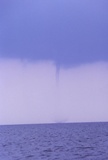
Since Ken started out the previous morning, I’m the first one up. After a stint on the bow I’m not really feeling the Mo Jo. Eventually I surrender the deck to my partner hoping to change our fortunes. Off to the north, storm clouds, as predicted, form. Three waterspouts drop from the fronts edge, one violently blending the waters surface where it meets the sea. Coincidentally that’s when the mornings first string of happy tarpon come rolling by. As the wall of water and wind approaches Ken gets an eat and all hell breaking loose.

As the tarpon catapults across the dark seas, the first line of heavy squalls hits us hard. The only boat within eyeshot of us is already hunkered down in their cockpit sheltered in their yellow slickers. By the time Kenny get his lady under control the sheets of rain and wind have transformed our peaceful surrounding into a wet surreal blur. Thunder (what’s wrong with this picture) reverberates atop the Marquesas. It’s our last day, so the battle goes on. Under a darkened sky now absent of rain we get several leader touches with the ninety-pound tarpon, but the shock wears through before we can do more.

By the time the sun sheds light again on these emerald waters, almost everyone has left this wilderness atoll. Given the nature of the day, Ken allows me amble time to end the trip with a tarpon of my own. Moving over to the south side I get a good eat, but didn’t see it because of the poor light. The few early strings grow less frequents here as we patiently wait. There’s another boat where John would rather be, that parts just a short time after we arrive. Behind him we’ve eyed a ball of big lazily rollers. He either doesn’t see them, or ideas of heading home occupy his mind. John begins a long pole to intercept this group that we’ve watched for thirty minutes or more. They’re daisy chaining when we arrive, yet before my first cast can be delivered the chain begins to break and they start to wander on. We follow in pursuit for some time.

I literally get a f…ing ton of shots at this ignorant string of fish. They lead us from flat to flat and channel to channel. I change flies, change leaders, cast in front of them, on them, behind them, strip the fly fast, don’t strip it at all, swing it like a soft hackle, all to no avail. They continue to roll and frolic all the while. Eventually we all get frustrated and leave.

With our frustration, our Captain wanted to take a little diversion from the reluctant tarpon. At this juncture we are the only remaining skiff left in the Marquesa’s. For the next hour or so we do a little exploring, plodding the tannin waters of the mangrove edges for a fish John’s never caught here before. For now, I’m reluctant to divulge our quarry fearing my friend will strike me from his calendar for next year’s season. Although we didn’t catch anything, the side show was worth the diversion.

Eventually we head back to the northeast corner of this beautiful atoll. As John takes the poling platform one last time, all is silent, to silent. For a time, not a single fish shows. Then that magic word we love to hear “tarpon”. “You got em. Point with your rod tip. Ya that’s them. Come on ladies, nice and happy now. Come on”. We all know this will be our last opportunity, especially me. Spotting a roller it’s obvious their happy, for it’s slow and easy with no real purpose in their movement. We do the same as we approach, slow and easy. For me, in afternoon dwindling light, I have a difficult time discerning heads from tail. John’s uncommon patience and skill puts mw right where I need to be to get the shot and an eat.

I have yet to yipp a fish this week and now is not the time to do so. As one of the ladies slips from the school to take the fly, I let her turn before coming tight. They don’t always cooperate in this way, but fortunately this time the tarpon does. Mayhem disrupts the quiet silence off the northeast corner of the Marquesas as eighty pounds of chrome irrupts from the shallow depths. I absorb all that unfold before me; the jumps, the powerful runs, the beauty of this marine wilderness, knowing this is last day.

Our tug of war becomes a war of wills, the limiting factor being the thin mono class tippet. For the longest time we’re just twelve to fourteen feet away, yet given my progress it seem so much further. In these clear emerald waters I can see every movement of every scale on the beautiful animals body. Several times the leader knots annoyingly nock as they clear the guides. That’s as close as we’ll get. Eventually the leader breaks in an effort to lift her from the bottom. As she silently disappears into the depths, John comment “there was a lot left in that fish”. My arm aches and I’m sweating as a big smile comes across my face. Thanks to our Captains efforts and Ken’s patience I leave the Marquesas on a note that not all last days end upon.

John digs for a cold jolt of caffeine, Ken and I water for the ride. Our run home should be quick. Although it’s still a fair trek to this island atoll, the time running home will give us a moment to reflect on our brief stay in the Key’s and this last day.

It’s late as we skim across the rippled surface of the inland lakes past Boca Grande, Man, and Woman Key. We’re the only boat left at this late juncture. Ahead for the first time in a while, the sky line of Key West is just beginning to show. Life is good!

Wednesday, May 17, 2006

Sustenance and Manatees

This morning’s 5:00am alarm goes off a little sooner than I’d like. I wanted to take in a quarter or two of playoff basketball before calling it a night. Not having cable at home, it’s something I don’t get to see very often. Between writing and doing a little tube time I finally turned in around one. Although not needing much sleep, my late nights are catching up to me. Numbly going about my predawn preparation I’ve no room to complain, after all I’m soon to be tarpon fishing. It’s going to be at least a three cup starter this morning so I head for the kitchen to get my first fix. If needed I can get a fourth at the Gas an Go later on.

After John dropped us off yesterday, we hit the City Market (that’s a whole story in and of itself) for lunch and some good chum. The chums for our mate Captain Ohearn. Since our first meeting and day on the water it’s a rarity when he’ll eat anything of substance. We use to take him a box of Fruit Loops, those being his cereal of choice. Since then we’ve bagged breakfast and moved on to desserts.

As we’ve gotten a little more acquainted we found that John definitely has a weakness for cookies. The more chemically enhanced the ingredients the more delectable they seem to be. It would appear that goes for a lot of the things John seems to be fond of when it comes to the major food groups. The last several years our chum of choice was a favorite weakness of mine, Oreo’s. This year, since it’s so hot, we went with something little more refreshing, creamed filled ginger cookies. We’ve grown fond enough of these little munchies that were eating them by the row, rather than by ones or twos.

This is our fourth season with Captain Ohearn. During that time I only remember one time when he took a moment to eat, his brief reprieve being manipulated by a numbing morning of infamous Key West nor’easters. Less than ideal conditions compounded by a layer of dense clouds. Shots that day were few and far between. Those we did manage were futile at best, especially given our ineptness under such ridiculous conditions. I guess more sane individuals would have taken the day off, but a day on the water regardless of the fishing always bears some merit.

He drinks water much like he eats. Where Ken and I manage a transfusion of liquids throughout the day, Captain Ohearn swills just a single small bottle of water. I think he does it not out of thirst, but in response to his better senses. Yet he defies us as to how he exists, given how hard he works, on such little sustenance.

His answer comes in a little 8oz can of sugar and caffeine. In his early days Red Bull was his fluid of choice. Now that he’s had a kid it’s whatever is cheaper by the case. Over the years we’ve come to judge his days by the number of super caffeinated drinks he intakes. A three drink day we’re all working overtime, however mostly John. One or two of these syrupy elixirs and things are generally going pretty good. Obviously we shoot for those one drink days, but there’s a lot about tarpon fishing that can easily lead to those two and three shot days. Enough of our Captain’s culinary critique! If he reads this, I’m sure he’d appreciate this coming to an end.

Today kind of starts out like one of those days. I’m chilling with that fourth cup of coffee, Ken’s up trying to figure it out. It’s another beautiful morning with dawns eastern horizon glowing an unusual burnt orange, intensified by the annual burning of Cuba’s sugar cane fields. The morning airs again notably sweet. First morning’s mystery, if you’ve been reading along, now commonplace with this mild southerly breeze.

Like the morning before we both jump a fish, but mostly fumble away a number of good opportunities. At this hour, one doesn’t see the eats. The lack of visibility complicates what appears to be rather simple. Unlike the previous two mornings, once the suns high enough to actually see one of these little ladies all goes quiet, those small pods of dawn rollers vanishing silently slipping into deeper waters before continuing their migration north.

This flats sudden calm has us running oceanside to the Tower Flats. Yesterday we gave these popular migratory flats a brief drive by. However, there were too many guide boats to make it worthwhile to stay. Today there are far fewer and our timing, not that I would know, appears to be better. John kills the motor and silently begins to pole us onto the flat. He asks, “who’s up”? Me being the last off the bow relinquish the duty to my partner.

You ever get a feeling that you know what’s about to occur? On this change over I did. Ken was going to do the deal, and with some angst I new it. Ken barely has the line from the reel when John’s on them, “tarpon”. From a long way off their silver sides glow as they lazily roll our way. Even at this distance we can all see it’s a fairly good sized group. As they near, our Captian begins to get a little more animated, “Shit, come on ladies. Dam that’s one big wad of tarpon. Come on ladies, come on ladies”.

“Whatever you do, don’t throw your fly line over them” John gives his final instructions before Ken gets his first shot. I’m down in the cockpit trying to get film in my camera to document that which is about to unfold. I have no recollection of Ken hooking up I was so fixated on the backs, eyes, dorsal and tails of so many happy tarpon gently rolling by. That infamous sound that a Tibor makes as backing vanishes from the reel finally diverts my attention. After a long battle the shock tippet eventually wears through.

I’m back up, and much like the earlier part of my day, the planets just don’t quiet line up for me. A second ball of tarpon comes within casting distance, yet they don’t seem near has happy. John puts us on the clock as all again quickly goes quiet before we “reel up”. Moving back into the braided labyrinth of mangroves they call the backcountry my partner, gracious as he always is, gives me my fair share of time on the bow before we hit a little secret baby tarpon hole.

Now one would think that after gaming for Key West giants that laying the wood to a 10-15lb baby tarpon would be that exciting, but oh contraire! John’s about as animated as he gets, poling silently along the brackish mangrove edge. There’s an electricity to the moment that has all of us on edge. Although we don’t gear down to a smaller weight rod, which we should have, the 15 pounder that Ken eventually sticks is as acrobatic and energetic as any tarpon gets. Were like three kids in a candy store.

As fun as this is, we are allowed only one fish. Since it’s been a little on the slow side, our Captain offers up another, but we pass hopefully appeasing the fish gods. It doesn’t take much to unsettle nature’s delicate balance. Everyone here is cognizant of that fact, saying thank you, before silently moving on.

Although we are here to pit our skills, or lack there of, against one of fly fishing great game fish, there are other diversions that add to this incredible experience. For me, the saltwater flats of the southern tropics provide a brief window into a unique and foreign wilderness, where emerald fertile flats flow from horizon to horizon filled with a cornucopia of intimidating and intriguing marine life. These pleasant visual distractions add to each daily venture especially during those periods of drought.

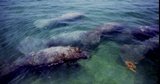
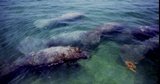
Two years ago on a chance run to the Marquesas we stumbled upon several hours of amazing fishing, made even more memorable by a rare Key’s Manatee that came up to the boat while we were hooked to a nice sized tarpon. In all of John’s guiding days he had never encountered one of these docile creatures this far south. For the second time, and again with us, we come across this unique mammal just as we’re finishing an oceanside flat. For at least the next hour all three of us are lying on the deck of the skiff in an attempt to become a little more familiar with our adopted family of six manatees. Eventually we quietly depart and like newly hatched ducklings, the group slides silently in behind the skiff to escort us off the flat. This was awesome!

Of this day I remember little other than our visit with our friends. Their acceptance of our intrusion into their world a memory for years to come. Yet their scared backs remind us of an encroachment into a world we’re just beginning to understand. For these guys, possibly such infringements have driven them south, their northern habitats threaten or lost. Wherever they are bound I wish them a safe journey. They are truly a long way from home.

Although we fished a little more, we should have called it a day resting on those good fortunes we had already had. Fishing was good, and far better than many a day we have had here, but the nature tour is what will be remembered the most.
Monday, May 15, 2006

Back to Normal

Captain Ohearn pulls up into the front of our colonial B & B as he did the day before at 5:45 am. John relays several bits of trivial news before we get underway. One, the pair of flip-flops that I left dockside are still there when he returns at days end. It’s not like you can’t find a pair of cheap flip-flops in Key West, which I did. Consequently this matter is of minor concern.

Bad news and of more significance is the tip broken on the Winston I’d been using. It happened as we were unloading the boat. One of the straps from our bags caught the line as we lifted it to depart. Not like we don’t have other rods to use, but when you get comfortable with one under such conditions, you’re reluctant to change.

The first part of our morning mirrors yesterday’s weather and routine. For me, that is where the similarity in the day ends. John quietly slips onto the flat as I begin, as instructed, to change flies. At my age this simple task isn’t getting any easier. It’s pretty distressing when you can’t follow the line through a figure eight knot when it’s sixty pound mono. Given my ineptness, I inquire as to how leisure I may pursue the project. John reassures me that I have plenty of time.

No sooner do I clip the fly from the leader than a pod of about fifteen happy tarpon pop up twenty feet off the bow. I can hear them, but I’m reluctant to look given my task at hand. By the time I finish, the fish feel us and silently move off. With that my first of many opportunities this morning quickly disappears. Luckily for the tarpon my first few attempts are hopelessly errant as I adjust to the new rod I’m now using. However, it’s not the rod, but the angler in an unfamiliar role that’s the weakest of links in this equation. A familiar saying amongst Keys guides is, “the weakest link in tarpon fishing is the angler”. Copy that!

My brief life as an expert tarpon angler (not that I ever claimed to be) comes crashing back to normal this morning. It was only a matter of time. I get my first eat with the sun well up in the eastern sky. By now there is enough light to see the fly disappear into the small tarpons mouth. The fish stays true to its course, never wavering, my line never comes tight. My next cast finds me fast to a 40lb rat that cartwheels across the flat before spitting the chartreuse tarpon fly. For a brief moment mayhem disrupts this flats morning calm. It ends all to soon.!

Ken takes the bow and doesn’t waste time and gets several eats, neither of which stretch his line or jump a fish. The operative word here is jump, since eats in the tarpon world don’t account for a great deal unless it’s really really slow. Since we were eaten rather than jumpin our mornings efforts didn’t count for much.

For the remainder of the day Ken and I get few other opportunities. John in his best efforts to find us some happy fish does a fair amount of running around. His knowledge, hard work and patience produce several chance encounters yet not near the numbers he had hoped for. Waning optimism effects our Captain probably most of all.

Around lunchtime I have a revelation. I’ve brought with us two other Winston rods. I remove the tips from both to see if either will fit on the one we broke. To our amazement the ten does. I quickly remove my line from the Scott rod, which I also like, and string up the one I’ve just McGivered. A cast or two is a quick testament to the success of the rigging. John does the same before we share a brief chuckle and tie on a new fly.

John meticulously works us through several more backcountry flats before we eventually move oceanside. We find a few sour fish, but that’s all. It’s late in the afternoon as we move onto probably our last flat. We talked with Drew, one of John’s best friends, who had fished Shark Key earlier. I can’t remember if they had any success, but what they saw was rather impressive.

As we approach the flat several other boats silently work the edge just ahead of us. We get in line and follow suit. I’m up just a short time before John excitedly lays out the coordinates for an oncoming tarpon; 70 feet, eleven o’clock. It’s 60 before I make a cast that puts the small chartreuse fly directly within the tarpons path. One long slow strip and she eats. Coming tight, I get one good jab before she removes a fair chunk of fly line from the reel. The first jump catapults the 125 lb tarpon high above the emerald flat. I’ll never get use to the elevation that these piscatorial behemoths reach with just a few pushes from their forked tails. For a moment we are eye ball to eye ball. On the third or fourth aerial assault we part company, the fishes huge body landing on the leader and snapping the 22lb class tippet.

This brief reprieve from a long drought has us all jabbering. It never fails. Nothing like a hundred plus pound tarpon to stimulate ones stupor.

Ken barely steps up on the deck when he gets his first shot. It’s followed by another and another. Temporarily we are surrounded. It’s only a matter of time, before he to is quick to another hundred pounder. After several jumps it heads for the nearest competing skiff. Both my boat mates do what they can to keep her from interfering with the other boats quest, yet this is not a simple task. For a while Ken stares down a lot of backing. His length of line making nearly impossible to put any pressure on this large fish.

By the time we leader the fish we are within ear shot of the other boat. Unfortunately it’s to close for comfort, their disgruntled glares evidence of our encroachment. We apologize and silently drift off the flat once Ken’s battle comes to an end. Out of earshot we resume our excited chatter and reflect on our good fortune. A fate obviously not bestowed upon the other two skiffs we briefly shared this flat with. We surmise that it wasn’t our imposition that caused their demeanor, but the fact that within just a short timeframe we whacked two rather sizeable tarpon while they went fishless.

With that another day in paradise comes to a close. All is quiet as we motor across the backcountries mirrored flats, each of us left to ponder our own separate thought and content with the way our day came to a close.

Thursday, May 11, 2006

A Perfiect Day

For the last several months I’ve lived vicariously through a 5 minute teaser called “Chasing Silver”. Since viewing it, which I have done numerous times, when it comes to fishing all I can think about is tarpon. Fishing for these big behemoths does that to you.

It opens with a sequence of photos from an era long past before Johnny Cash’s breaks into “The Believer”. That in and of its self is enough. The opening scene pans an ocean calm as glass. Just off a lone skiffs bow a small pod of lazy tarpon mill about delicately breaking the mirrored surface as they roll. A guide perched much like a heron about to descend upon its unsuspecting prey skillfully conducts his angler into position. They call it fish porn for a reason and this is as good as it gets.

Since that first viewing and every subsequent one after that I’ve yearned to cast a fly to 6’ logs in the seas resemble those in that opening scene. To date such conditions have eluded me.

Tarpon under the most ideal conditions are a challenge. Even if everything goes right, in a nanosecond it can go oh so wrong. As difficult as it is, seeing a tarpon eat your fly is a sight worth beholding. The ensuing surge and aerial acrobatic once you send the hook home is something incomprehensible rivaling any spectacle in the fly fishing world.

It’s May 8th, 6am as Captain John Ohearn pulls up front of the Cypress House to begin our first day of chasing Silver Kings. As we motor up island to the City Marina there are really no preconceptions as to what lies ahead. It’s best that way. Early indicator, clear skies overhead, flags barely rustling in morning light breeze lend a small window into what momentarily may lie ahead. Every morning of very day, one help but wonder.

I run across the street to get a round of coffee for the boat, while John and my partner Ken put in. By the time I return we are loaded and ready to get underway. There’s a sense of exhilaration that comes from running in one of these specialized flats skiffs that is difficult to describe unless you’ve done it. Once on plane, at forth miles and hour, its as if the boat hums. Sweet music to a flat fisherman’s ears.

John’s got a hot tip for the day that leads us to our first destination. Hot tips here at best are no better than hot stock tips. After a short run from the marina, John alludes to this fact as he idles into position. Ken’s up first. I prefer to finish my coffee and let the world unfold as it may. Idling onto the flat there is just enough light to string up our rods and make out any rolling tarpon should there be any. Those few wisps of clouds showing to the east are now a hint of rose, highlighted by linger smoke pushed north from the burning of Cuban sugarcane fields. On this morning the air hangs noticeably sweet.

It doesn’t take long before Captain Oheran utters a single familiar word that we’ve become accustom to, tarpon! He says it in such a way that definitely gets our attention. We’re here looking for laid up or moving tarpon. At these early hours with such poor visibility, our only hope is for lazy rollers as comfortably rising in the water column for lifes sustaining air. For a time we struggle to get the fly in front of a fishes face. Typical first morning jitters and CF’s. Sunrise puts our long shadows over many of these resting giants altering them to our presence. They quickly blow, as it called, eliminating yet another opportunity. Yet before we leave here we will land several small Key’s tarpon, a feat we’ve seldom duplicated most mornings here.

Excited about our early morning accomplishments, we move out in front of Key West to Seven Sisters. A series of flats where we have shared numerous successes in the past. As we approach skim across its inside edge, our Captain notices a line of skiffs occupies most favorable positions. John’s not too excited, but plays it out. Since we are here he’ll indulge in the game. After being teased by one fairly large school of anxious tarpon we soon depart, a move that’s much to all of our likings. Before long were slidding almost silently into the backcountry, an area where we’ll find fewer fish, fewer if any guides and tarpon that historically are rather aggressive to the fly.

Remember that opening scene in “Chasing Silver”, by lunchtime with Ken again on the bow, that’s exactly what we have. Alone in the backcountry with a few laid up tarpon around the air is electric. Several tarpon tails silently slice through the calm mirrored surface in one direction, while in yet another fish gently rolls. Patiently we make our way through this small basin, like a cat stalking its prey. Ken get several good shots before finding a fish that cooperates. One clean strip and this rat quickly elevates to inhale the tan fly. It’s explosive leaps and gill rattling jumps splinters the silence. The waters calm surface shattered like broken glass.

Shortly after landing this fish we move to another favorite haunt of Johns, having exhausted any additional opportunity in his little secret spot. Almost immediately a huge lady rolls within casting distance. Our Captain remarks emphatically about her size. His comments do not fall on deaf ear. Its still calm, so my shot is easy, yet there’s nothing easy about casting to a six foot long tarpon. Although my shot tracks true, it’s a little close. Irritated the big tarpon moves from harms way.

It doesn’t take long before we are on another. This time my cast is true. Bringing the fly under tension the tarpon immediately slides in behind the fly, yet minus the wind and elements we normally endure the whole scene appears to play out in slow motion. Upon my second strip, the tarpons mouth opens and into the great abyss my fly quickly disappears. As the line goes taught, I attempt to jab the hook home. For the next ten minutes it’s absolute mayhem. Then the tug of war begins where it’s just you against the fish. By the time it’s over, sweats dripping from my nose, and my fighting arm aches.

For the seven years I’ve been coming here, this is the kind of day that I’ve dreamt about. Although I would like to jump another fish or two more before I leave, I’m content to be fortunate enough to have such a perfect day. I know that’s not what our Captain has in mind, but after a few years under my belt, I don’t take anything for granted. Heading back to the dock the three of us chatter of our success. And before departing for the day, optimistically look into what the next day will bring.

Friday, May 05, 2006

Running out of Time

Count downs ticking away but at this juncture I scrambling to get ready and finsh up details at work. Our group gathered in dawns early light today for our last casting session before departing. George and JD head down tomorrow. They'll be waiting when we arrive with a live rreport.

Its windy, cool and drizzling as we string our rods up. Take out the later two elements and conditions are perfect for our final casting tune up for the Silver Kings of Key West. You never know. At least I hope we can eliminate the cool and drizzly part from our days once we arrive at our tropical destination. After doing this for a while, I don't take anything for granted. As I often say, probably even said it in one of my previous posts: "you get what you get when you get there". My mantra helps keep it simple, with few surprises.

The line winder was busy this morning upon arriving back at the shop. We cut our casting a little short so we could work on last minute gearing. First, we removed the old park lines that had grayed from use over the past month of preparation. At the same time we check backing connections and cleaned the new lines as we spooled them on. I lost a fly line to one of the largest Tarpon I have yet to hook, because I didn't check my backing. For these bad boys, you need to check all 300 yards to be safe.

I enjoy this part of getting ready for any trip. The clean up part upon our return is equally as enjoyable. I prefer to do this on the first day back, since I ususaly don't get much work done. It insures that my gear will be in ready for next years trip and puts some finality to the past days Walkabout. Now that I have most of my customers ready, I can begin to see where I'm at.

I haven't really had time to get ready myself. In between bites of lunch today, I'm making my first attempt at finding some of my lines that have been loaned, stored and loaded onto various reels for various purposes. I also need to build a few more leaders. Kind of trashed the ones I built during our warm-up. By days end, between Kenny and my lack of organization I finally find the lines that I will need and a few extras for backup. Never needed a back up before. The one I lost to that giant, we found the next day.

These days, lines are so particular that matching lines to rods can be critical to an outfit’s performance. Another reason to get out and practice before you depart, and a primary motivation for me, especially since Zach sent me some new linest to try out. It's taken some time, but for the two 11 weights I'll be fishing I now gear assembled to suit my casting style, or lack there of.

My son is the same size as I am, so last week having some notion that he may have borrowed some of my shirts, I found he had virtually cleaned me out before he went back to school after the spring break. Fortunately it was in enough time to order some new stuff from Patagonia, especially a silkweight top. After fishing in this piece while on a bonefishing trip, I don’t ever go saltwater fishing without one. For that matter, I take this piece on most of my travels.

Flies, my drug of choice. Outside of casting, I’m a junkie when it comes to flies, always have been. One of my first purchases for Tarpon fishing was a box of Tarpon flies. I called my friend Capt. Cardenas and ordered a couple of dozen for my upcoming trip. This was 6 or 7 years ago. and early in my initiation. Since I don’t fish Fluorocarbon leader material, the guys had to tie monofilament. I also had to have a box to put these flies in, so I had them all loaded into a Tarpon Stretcher. Four hundred dollars later, I had my first Tarpon flies. And you thought Trout flies were expensive. Funny thing is, just like my early adventures into Trout fishing, those initial flies, for the most part are intact and collecting dust along with the box in my basement. Maybe one day they’ll be a museum piece. At the price I paid they should be. And you don’t think I’ve taken a ribbing from my crew on this one. Walking to meed my Captain that morning with my new fancy Tarpon Stretcher, I thought I was pretty cool. I can only imagine what my Captain thought.

Some of lifes lessons you have to learn the hard way. Now I hand tie all my leaders and tie most of my flies. Now that I have 4 or 5 dozen in my box, even if I don’t tie any for this trip, I should have enough to get by. Actually my Capt. Ohearn would probably like it if I quit fooling around and fish flies that he has had success with. After all he is the guide and as good a Tarpon fly tier as I've seen.

I need to move on if I'm going to get ready. My next post should be from Key West if Kenny's wireless connection comes through.

Thursday, May 04, 2006

Getting a Perspective


Just days away from my departure and I get a cold. I must have caught it from my daughter the other day, who just came down with a nose runner and a nasty one at that. Little to deter my efforts and excitement as I put the finishing touches on getting out of town. I don’t know of a better cure for a cold than warm sunshine, some oysters and a brew after a long day under Florida’s hot sun. Not to mention the sensations of a silver freight train emptying your reel of 30lb packing at half the speed of light.

The other night we talked to one of our Captains. We must drive these guys nuts; How’s the weather? Any fish around? What are they eating? Where we going to fish? What’s the fishing going to be like when we get there? Ya-da, ya-da, ya! So far I’ve refrained from calling Capt. Ohearn, but I’ll need to touch base with him over the next few days to figure out our first morning logistics. It’s usually pretty straight forward, but you never know. Checked on our rooms, however and we are good to go there.

That first day is such a cluster f… regardless of our preparation. Most flights get in late if they get in at all, and with all the gear Kenny and I bring it takes us sometime to get semi organized. First stop upon our arrival is Bo’s Fish House for a Grouper Sandwich. Then it’s back to our room to make sense of what will need that first morning. Walking down the worn walks of Key West at first light we must look like a couple of bag ladies fresh back from a yard sale. Capt. Ohearn gets a kick out of it. The challenge for him is where to put it all. Rods are easy, our bags present a little more of a stowing issue.

The other morning when the crew: JD, George, Kenny and I were out casting we started talking about favorites attributes of our trips, outside of the obvious. George immediated whet through his interpretation of sticking a Tarpon, before diverting to other pleasuable aspects of our trip. George and JD have a sweet set-up that is coming to a close possibly this year. His guide, Capt. Willey Benson’s, mom is a gourmet chef. In the past she has always prepared their lunches. Typically, you are in charge of your own eats on the boat. It’s good advice to cover your Captain as well. Mama Benson’s lunches make a bad day of Tarpon fishing tolerable and a good day great.

Kenny and I wing it each morning. Not that you can’t get a good lunch in Key West, but Mama Benson’s stuff is pretty exceptional. Personally I wouldn’t know. Kenny and I either hit Dam Good Foods, open twenty four hours a day or Sandy’s. I would have to say that Sandy’s is my favorite, but we need to hitch a ride with JD and George to get there. Therefore we don’t always get to visit this little unique slice of greasy heaven.

Sandy’s is a Cuban eatery next to a laundry mat, chickens are running around, locals are propped up at the outside counter reading the paper starting at first light. It’s a happening place. Typically we get a Café con Leche with two shots and two lumps, egg and ham sandwich for breakfast and Cuban Mix for lunch. It doesn’t get any better. Bag of Oreo’s to wash it all down. They also work pretty go for chumming Capt. Ohearn up.

One thing about Capt. Ohearn he rarely eats. I don’t know how he does it. Once in a while we can get him to stuff down and Oreo or two, but that’s about it. His main source of daily substance is Red Bull. We judge the difficulty of the day on the number of Red Bull he swills. A three day Red Bull day is a long day on the hunt. How that he has a kid, maybe that will change. I doubt it. Kenny and I will have some Fruit Loops and a fresh bag of Nabisco’s finest stuffed cookies just in case.

As much as I enjoy the choices of cuisine in Key West, the ocean is what brings me back along with the incredible diversity of marine life that it supports. The obvious I mentioned earlier are the incredible Silver Kings. But, the world they live in and those creature they share the waters with I find amazing.

Several years ago we had a fishless trip going into our last day. The rest of the group was in the same shape. Each nights gathering at our favorite watering hole got a little got a quieter. For our last day John thought that the seas would be calm enough to run out to the Marquesas. At diner that night remember George asking if our Captain had life jackets. The Boca Grande Channel can easily swallow a small flats skiff under the right conditions. I told him I had never asked. It’s amazing what we take for granted. Both Ken and I were excited regardless of the conditions.

It’s about a 45 minute ride to Florida’s most southerly wildlife sanctuary. Under a black sky we skimmed across the smooth surface of Key West waters before coming to the Boca Grande Channel. Quickly we dropped our speed form 40 to 20 in order to keep our boat intact. John almost lost one boat here last year. Although the seas were rough, I had crossed here before under far worse conditions. By daylight we pulled into the southern tip of the Marquesas and quickly came across several rolling Tarpon. These would be the last few we would see for sometime.

There was only one other time I had been out here when there were no other boats around. That was two years back when Jeffrey Cardendas and I spent several nights on the Huck Finn in the Marquesas. It rained five inches that first day, no wonder. Weather during the previous week had kept other Captains from venturing here on this day. Regardless of the out come to be here solo, was worth the ride. The Marquesas are amazing place.

After plying the outer edges of this usually fertile atoll with no opportunities we turned to the inmost portions of the Marquesa, Mooney Harbour. At first we poled the edges in search of some baby Tarpon. I landed a rather large Snapper that quickly became dinner for John that evening. I took over the platform to give our Captain a break so he could get a little fishing/casting done.

It was well into the afternoon when we returned to the southern bite. At first there was no sign of life. Then a few Sharks showed up. As they say, if there are Sharks in the neighborhood there’s something to ear. Not exactly what we had in mind, but sharks are cool. Several more sharks, Bull and Nurse, cruised near the boat before a small string of Tarpon came from inside the atoll. My first cast at the string had two smaller Tarpon fight for the fly before one drilled it. John was into his third Red Bull by the time we departed. Although shorted lived we jumped six and landed half as many. The highlight was a Manatee that swam up to the boat while we landed our second fish. In all the hours that John had worked these waters he had never seen one of these docile creatures here. Bonus!

It was the first time saltwater fishing where I had witnessed waters void of life suddenly become alive. I have seen it many times Trout fishing, but never among the salty seas. Arriving back with our crew, late, they new we had gotten into them, even though we tried to down play our success.

It’s days like these with such incredible visual displays of life and unexpected outcomes that keep me fishing. Although the fish Gods shined down on us this day, if we hadn’t caught a Tarpon, it would have still been a day worth remembering. Fish, food, people, and wild places, not necessarily in that order, stimulate the mind, foster friendships and leave lasting impressions.

Monday, May 01, 2006

Migrations


When it comes to migrations, most envision Alaskans vast herds of Caribou or the massive bodies of animals that wander across the African Serengeti. Those of us in angling circles primarily ponder a variety of species of fishes that inhabit bodies of waters throughout the world. Yet much like the fishes, we also migrate to all corners of the globe in pursuit of those fined species we hope to catch.

For me it all started in 1985, when I was given the opportunity to guide in British Columbia for Steelhead. I'll never forget the lodge owner’s comments shortly after I arrived, "After fishing for Steelhead you'll never be the same". How right he was, but in more ways than he had alluded to.

Before arriving at my final Canadian destination, I got my first taste of the Steelhead experience. Standing in a secluded section of Vancouver International Airport waiting to catch the final leg of my flight that would lead me to “Steelhead Paradise” I ran into a number of migrating anglers all headed to Smithers as I was. It wasn’t difficult to pick out the anglers. Might have had something to do with the rod tubes a number of the gents had in tow or the Sage bags under arm. Most were older than I and frequently crossed paths each year on their way to one or several of British Columbia’s legendary Steelhead waters this same time every year.

Flying on my and this being my first trek to these parts I wandered over to make acquaintances. My first victim turned out to be John Simms, the original owner of Simms (dah). He quickly began reminiscing on his annual treks to BC, the rivers he had fished and some of the changes from past Steelhead trips. Pretty soon there were a number of us joining in the conversation. The journey had begun.

Later I met John Fick of Duranglers in Colorado. It would be one of a half dozen chance encounters we would have in our travels to Steelhead country. On a white knuckler into Smithers, BC on another year I shared a seat with Trey Combs. He had just completed one of the finest books written on the subject, Steelhead Fly Fishing. I kindly refer to his this book as the Bible. Due to the weather we couldn’t find a runway to land on so our pilot ended up diverting to Terrace. It was a great opportunity to pick his brain. It was also a great diversion from pondering the ending should our pilot not be able to find pavement through the gray abyss that we had been circling through for sometime now. Over my years of taking this trip, I have had a few such flights.

For the past 20 years my migratory family of Steelhead bums continues to grow where ever Steelhead river flow; California, BC, Idaho, Washington, Oregon. If you ever get into chasing these amazing fish around, after a time you’ll even know who to expect depending on the dates you travel and your final destination. As I’ve ventured into the world of Saltwater fly fishing I find it no different. A few years back while getting groceries in Key West I ran into a guy who I’ve sat next to on the plane numerous times when visiting Steelhead country. Small world. Like Steelhead he had been traveling to Key West for years chasing Florida’s Silver Kings. Now to, as in my travels to the North Country to fish for anadramous fish, my acquaintances have grown among the sunny climates of the world.

With just a few days left before I depart the phone starts to ring and Tarpon anglers I’ve come to know have begun to stop in the shop to get a progress report. This morning I met up with Ken Louder, my fishing partner on this trip, at a local park to work on our cast. George Haley, one of our long standing Tarpon junkies also headed south, stopped in to check on our arrival and to find out if I had heard any news. Another Floridian called to see when I was going to arrive so we could arrange maybe and evening of Splooshing Tarpon.

I remember coming into the shop at 6am one morning to get some work done before the doors opened. This was a few months back. I usually don’ answer e-mails until later so I can get my paperwork lined up, but this morning I did. A customer had said he was going to e-mail me a Tarpon clip he had seen and sure enough it was there. I fired it up, big mistake regarding my morning plans, and was soon in another time zone. Johnny Cash was singing in the back ground, something about Jesus. Andy Mill the king of Tarpon was proven to be a mere mortal much to my pleasure. When it was over I played it again. This time with the light out so I could really torture myself. When I was done with it the second time I turned a lot of normally productive peoples days into mush and sent it off to my circle of migratory friends. That I would have to say is when mentally my officially migrations south began. Come Monday, it officially starts.

Sunday, April 30, 2006

Casting


When I was 9 and picked up that old Southbend fiberglass fly rod with a Bluegill sponge spider on it, I was hooked. At that time I didn’t know that I had a fly rod in my hand, it was just another fishing pole. However, from that day forward, when I would ride the 10 miles out to our friend’s lake to fish for Bluegill and Bass I would always use the Southbend fly rod. There was something about the way you worked the line back and forth, the challenge of getting the fly right where you wanted that to this day still intrigues and challenges me. With Tarpon on the brain, I’m back out to the pond trying to improve my casting techniques with the big rods.

Regardless of how the fishing is, one of the first comments upon most of our customer’s mouths upon returning from a saltwater trip, or for that matter most trips, is in reference to the wind. Rarely is it the lack there of either. I remember two years ago in Key West a cold front hit by days end. The wind blew constantly out of the NE at 20 plus knots. By each days end your head and body was numb from the noise and pounding that we took. It’s difficult to practice for such conditions, especially when you don’t know what direction your targets are going to come from and at what speed. Often times under such conditions everything happens incredible fast and most of your cast are rather short by saltwater standards.

Last year I remember making a statement about my casting, probably lack there of, and Capt. Ohearn remarked: “you can’t really practice for saltwater flats fishing because it is so difficult to replicate the variety of scenarios and conditions you encounter”. To some extent I would agree with him. One moment your making a cast 50’ over your back shoulder, which I’m not very good at, the next 20’ off the bow and before it’s all said and done your punching one up wind 60’to 70’. Its one thing to have a target that is standing still, but another to have a six foot moving object that is under most conditions is difficult to judge their speed. However, the challenges that saltwater fishing presents has an awful lot to do with what I like about saltwater flats fishing and fly fishing in general.

My first two outings this year in an effort to get off on the right foot in trips preparation was in the dark. I had just finished up with a lesson and brought my 12 weight to cast if by chance there was some light left. By the time the lesson was over there was enough light to get the rod strung up, but that was about it. My second effort was similar. After a long day at work, I stepped out in front of the shop shortly after the sun set and again flailed away into the darkness. Actually casting in the dark is a decent exercise. Since you can’t really see what you are doing, you must rely on the feel of the rod. For many of you the visual aspect of the cast supersedes the timing that is more critically triggered by the feel of the rod. I can only imagine what drivers by thought when they saw me form the lights of their car heave hoeing to imaginary Tarpon at such an hour.


Today’s a little different. It’s been raining, but at least it is light out. It does make a difference. I can see the ducks and geese on the water that I use as targets. Geese are Tarpon and Ducks are Bonefish, possibly a Permit if it happens to be a fat Duck. Before some of your think I’m harassing the waterfowl, it’s pointless in preparation to cast at your target, whatever you may choose. Remember saltwater fish are always moving and you need to lead them by three or four feet if you are going to get the fly down to a level where the fish can find your imitation. Our local park waterfowl make great decoys for preparing for such a trip. About the right speed and they’ll approach you from all angles in hopes of getting a hand out.


One thing I constantly get asked by customers when preparing for a trip; what do I need. Having hosted trips now for over twenty years the single most important thing you can do to help make your trip more successful, besides having he proper gear, is to learn how to use it. I don't know how many trips I've been on where anglers don't take the time to do a little casting in preparation for a trip and they waste half or more of their time trying to figure it out. It would be one thing if they didn't care, but in conjunction with their struggles is a lack of fishing success.

Having just about bonked Goose on the head trying to throw in a crosswind, I definitely need a little more pond time myself.

Friday, April 28, 2006

New Stuff


One thing about working in a fly shop, it’s Christmas everyday. I love how customers looking for something for the flyfisher who as it all and comment “They’ve already got everything”. I’ve been working in this business for over twenty years now and my list is still a very very long one.

In preparation for my upcoming trip to the Keys, my first box of goodies arrived from my buddies at RIO. These guys are great! They have pioneered so many great products since their introduction into the market. I remember meeting Jim about the time I opened the shop. One of his first products was two rubber vacuum cleaner belts that you fit over your Maxima spools to keep the unmanageable material from living a life of its own. If you’re a steelhead fisherman, you know exactly what I’m referring to. Anyway, of all the products I saw that year it was the coolest.

I called Zach the other day to talk about some leader and shock tippet material to try. Zach tollerates me, don't know why, but I'm greateful for his patience. What Florida Key guides like best about Fluorocarbon is it’s small diameter. It makes tying knots, especially blood knots, for shock tippets very easy. Monofilaments generally run a little larger for the same pound strength. However, looking through their catalog I found some 60lb monofilament that was the same diameter as its counterpart in Fluoro.

The box arrived today along with some fresh 22 lb for class tippets. Since I’m not interested in World Records the larger class lets you put a little more wood to them and get your partner up on the bow a little sooner. It also is a little more forgiving. Not being near as skilled as those who do this thing on a regular basis, I need all the help I can get.

Anyway, as soon as I opened the box I started tying a fresh batch of Tarpon leaders. I use a Bimini Twist looped to attach they Class tippet to the Butt of the line. I’ll tie a number of these up, I call them cartridges, and leave the final assembly for when I’m on the water. With just a blood knot I can add the shock tippet of the size that is needed quickly. Nothing fancy, but it does the trick.

Also in my little box of goodies were several new fly lines that I ordered. For the rods I fish, I prefer the RIO Clouser line. To try this year I ordered RIO's new Quick Shooter line. I’ve fished this line in the past, but switched to the Clouser after going through a similar trial and error process as I will put the new Quick Shooter through. Zach convinced me that the new configurations for the Quick Shooter would be more to my liking.

I’m trying a new rod for the first time, the Winston BiiX in the 12. Usually I get pretty set in my ways when it comes to rods and when I glom onto one I like I stick with it. My favorite trout rod for example is 22 years old. Rod companies love me!

In the past I’ve fish several of Winston's other Boron rods, but never the 12. It’s been hard to get. Having put an hour or two into it already, I think I’m going to like it. Although I have only had a chance to cast it at night so far; don’t ask.

Last year I took Winton’s BiiX down for a permit rod and ended up laning about a 70 lb Tarpon. As light as it was I was surprised by how well it cast and handle the Tarpon. Can’t wait to put the 12 to the test. That is if conditions and Murphy’s Law don’t interfere with our opportunities. Having had several fishless trips to the Key’s in my earlier days I know the challenges that may lie ahead. In checking the weather, so far it looks good. The bad new is the fishing right now is great. Could be one of those; you should have been here last week. Regardless, it won’t matter for after all I’m going to Key West.

Wednesday, April 26, 2006

Preparing for the Silver Kings


One thing about getting ready for a trip, being in the fly fishing business I'm sure the sympathy is going to pour out at this point, is they cut into my time on the water locally. With good Blue Wing and Stonefly hatches taking place now, I refrain from partaking. When trout noses are up, it can be distracting to focus on tasks at hand. In particular on those days when it’s spitting a little rain, which lately it does quite frequently. However, with a Tarpon trip ahead there is plenty of incentive to get all my ducks lined up so I can head south without any trepidations.

Not having time to sit at my bench lately and tie a few flies, I’ve begun to assemble my leaders. If I used Fluorocarbon this task would be rather simple, but due to the impact this stuff has on our resources I prefer to use standard monofilament materials. For those not familiar with Fluorocarbon, it last thousands of years. Although as fly fishers we use very little, collectively however our use and impacts are extensive. Also through our purchases we support an industry whose material is used for ocean drift nets….etc. Catch my drift(no pun intended)! We forget sometimes that our purchases have impacts that are far reaching. Enough said for now.

My first tarpon experience was with one of the best, just by happenstance, Capt. Jeffrey Cardenas. I was in the Key’s with my family and he gave me a call one evening to see if I wanted to go catch a Tarpon. That was an easy answer. We met after he finished work and headed out. It was a rare time on the water of no wind and smooth silvery surfaces, which later I was to find was the reason for his venturing out on this spectacular evening. Having made Jeffrey's acquaintance several times over the past years, we had discussed of hooking up. His call surprised me given how busy these guys are during their season.

My son of 12 was at the wheel of Jeffrey’s Maverick as we left the Marina. He was having fun know doubt. The first few places we checked were void of fish, but it was still early and the tranquility of the evening was worth the price of admission regardless. By the time we found our first Tarpon Key West’s evening migration of tourists to famous Mallory Square was in full swing. They gather hear each evening to witness sunsets green flash. Like many things here I think this particular phenomena is alcohol induced.

As we motored up on the flat a Tarpon rose to take a drifting shrimp a little over 100’ in front of our path. To this day its massive silhouette is still etched in my mind. The engine was killed and we silently drifted into position for what we hoped would be a chance hook up. Jeffrey asked if I knew how to poll a skiff. I was embarrassed to answer no, as several more Tarpon rose to dine while we prepared a rod. That telltale sucking noise ominous in the still evening air. By the time we had line out the guides and on the deck there were fish within casting range. Jeffrey offered, being the gracious host he always is, the first shot. Having never done this before, I yielded to observe and learn from one the wise one.

Just to be on the flat and listen to one of these giants feed was worth the ride. To hook and land one, not expected given all I have heard about fly fishing for the Silver King. After casually laying out several beautiful casts, Jeffrey was soon fast to about a 70lb. Tarpon. To watch a video of Billy Pate catch a Tarpon is exciting in its won rite. To witness this act takes the experience to another level.

By the evenings end Jeffrey and I had hooked and landed a number of Tarpon. While he chatted with several other guides who shared this evenings flat with us, I landed my first. Like my first steelhead in BC, I haven’t been the same since. I would later learn that Tarpon feeding on drifting shrimp that commonly occur on such placid nights is called “Splooshing”. After dark sitting in the boat hearing those prehistoric beasts and having a cold one, you could still hear death on the flats all around us.

Little did I know how good that night was. The following years trip back to the Keys however put it in perspective. My fishing partner Ken Louder and I, other than a few eats got blanked. This was more like the Tarpon fishing I had been hearing about over the years. This shut out it was got me going. I figured if I was going to learn this game than I need to do as I had done with trout and steelhead fishing. Read the books, tie the flies, learn the knots, and even learn to pole the boat. It’s paid off.

So as I begin to prepare for this years trip by tying Bimini Loops into my class tippets then attaching the variety of shock tippets I’ll use I reflect back on past trips, their success and failures. I pulled my tying stuff out last night and began filling in the holes. Then there will be the new patterns. Creations from past experience and the patterns I almost always tie on first. Like most trips, the more I put into them the more I seem to get out of each adventure. It seems the same goes with life.

To be continued….